
*disclaimer: I am not a medically licensed psychologist or medical practitioner. These blog posts are not meant to replace getting real help and guidance from a trained medical professional. If you are in crisis and need immediate support, contact 911 or call the suicide prevention hotline at 988.*
One thing I struggle with a lot in my life is getting caught up in the whirlwind of the things going on around me. It is hard not to get caught up in it when we are inundated with news articles on chaos in the world, stress from our loved ones and what is going on in their lives, stress from our pets, and our need to be on social media doom scrolling until we find ourselves dizzy with all the bad stuff out there. It is hard not to get caught up in the stress of the world when it is at our fingertips, in everything we do, and everywhere we go. But in a world where stress is a fact of life, we have our toolbox of stress management tools, and this week’s tool is finding our calm through meditative or self-care practices that take us away from phones and our stresses and force us into the here and now. This week, we are going to discuss the importance of finding our calm center.
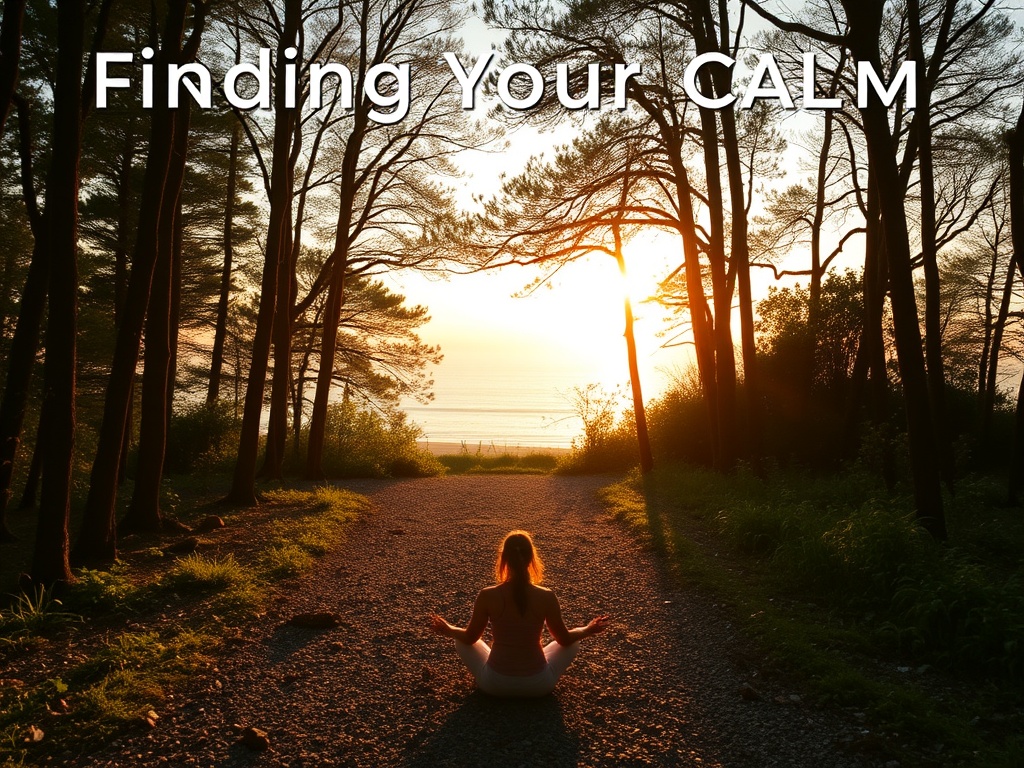
Everyone’s calm center looks different, but it all comes down to being mindful and present in the moment. This can be done through mindful walks, meditative practices, breathing exercises, guided meditations, yoga, or practicing gratitude and kindness directed inward, among other things.
Practicing mindfulness is good for our mental health because it helps limit the stress we experience to the here and now and gives us practice in finding our center and tackling challenges with a clear mind. Sometimes our stress comes in the form of worry. We worry about what is next, about work the next day, what is happening states away, or on the other side of the world. We worry about the what-ifs and the maybes. But honestly, we have enough to worry about in the here and now without having to stress over the things that aren’t immediately affecting us or aren’t happening right this moment.
That is not to say that its not worth looking at whats happening in the world or worth planning to our future for those what-ifs and maybes, but when those things are consuming our thoughts and taking a toll on our mental health, we know that we can turn to mindful practices to bring us back to the moment and realize that in this time, in this moment, the world immediately around us is not on fire and we can calm everything down.
Meditative practices have many benefits for our mental health aside from just reducing our stress. According to a mental health and mindfulness facts sheet compiled by Simple Practices (2024), meditative practices can help us with emotional regulation, sleep, and focus and concentration.
What is mindfulness?
So what exactly is mindfulness?
According to the American Psychological Association (2026), mindfulness is awareness of one’s internal states and surroundings and is a practice central to many therapies for mental health. It is a core practice in therapies like Cognitive Beheaviral Therapy or other therapies meant to reduce stress and is used to reduce stress and combat potential destructive behaviors.
Practicing mindfulness means practicing awareness of how you are feeling, of your thoughts in a given moment, of the surroundings you are in, and how they are affecting you and your body. Mindfulness is about knowing yourself and sitting with yourself without judgment, just allowing yourself to be. The situation, thoughts, and surroundings aren’t good, and they aren’t bad; they just are.
Meditation
When we think of mindfulness, most of the time we are thinking of meditation because that is the easiest form of mindfulness to discuss. Meditation is a good mindful practice when done correctly, but it is not without its challenges. There are many different ideas about what makes for a good meditation- is it sitting, lying, or standing? Is there music, or are you in complete silence? What about guided meditations? Is it best done before bed, in the morning, or in the middle of the day? The honest answer is that, for mental health, it doesn’t really matter if your laying down, sitting, or standing, if there is music on or off, and if it is a guided meditation or not. The goal of meditation is to be without judgment in the moment, focusing on your breathing, how your body is feeling, and observing thoughts that pass through without the need to label or judge them as good or bad, and without reaction to them.
There are many ways to practice meditation, including guided meditation on YouTube or apps, books that teach about meditation practices, and apps that have meditations for all kinds of purposes, from sleep to weight loss to stress reduction. There is an overwhelming amount of resources. My suggestion is find the one that works best for you. I personally prefer, if I am doing guided meditations, calm male voices with a British, Irish, or Scottish accent, but for others, that can be highly distracting, and they may prefer female voices with no or neutral accents or no voices at all, just music or silence. What works for you?
The Challenges of Meditation
For people just starting with meditation, it is difficult to be still and to let thoughts go through our mind without focusing on any one particular thought, worrying, or judging. And it can be very disheartening at first, trying to find that calm and easy sense that you probably see other people practicing meditation exude. It can also be very uncomfortable at first because we don’t put a lot of emphasis on mindfulness and non-judgment in today’s society. We also have to label things good or bad or different shades of grey, and we can hardly let things sit. If you’re not someone used to sitting with yourself in the moment, it can be scary, especially if you have a negative view of yourself as a person. But the more you practice meditation, the easier it gets, and it is a highly transformative process that opens the door for self-acceptance and calmness in the face of stress.
Other forms of mindfulness to consider
However, if pure meditation is too daunting, other forms of mindfulness may be less of a challenge and lead the way to meditation practices later down the line. Practices that involve movement are easier at first and take the form of things like tai chi, qigong, yoga, or mindfulness walks. With these, the goal is again to focus on being in the moment without judgment and taking notice of yourself, your thoughts, your feelings, your breathing, and your surroundings in great detail without labeling them as good or bad. If these movement practices are something you are interested in, there are many ways to gain access to classes or programs that can help. YouTube is a great resource for all of these practices. There are also yoga classes and tai chi classes online and on Amazon Prime Video, but they usually cost some money to sign up for them. Oftentimes, there are local groups that meet to practice Tai Chi or Yoga at community centers or in the park, and Meetup.com is a good place to go to look for such meetings in your local area, as well as Facebook pages and the local community centers and gyms.
Conclusion
It is good to have some mindful practices every day for at least five minutes, if not longer. Time of day doesn’t matter as much, though meditation before bed or mindful practices before bed can be highly beneficial for sleep, as mentioned earlier. The point is to get into the practice, however, so that when stress happens, you are prepared and have practice using the tool of mindfulness to help center yourself and take on the challenges without judgment of yourself and your feelings as the stress occurs, and with a clear focus on solving the problems at hand.
Citations
American Psychological Association. (2026). https://www.apa.org/topics/mindfulness
Simple Practice. (2024). “what is mindfulness?” fact sheet. SimplePractice. https://www.simplepractice.com/resource/what-is-mindfulness/?g_campaignid=21061586339&g_campaign=PMAX%2B%7C%2BResources%2B%7C%2BLead%2BGen&g_keywordid=&g_acctid=419-488-5451&g_adid=&g_network=x&g_adtype=none&g_adgroupid=&g_keyword=&utm_source=google&utm_medium=cpc&network=x&utm_campaign=PMAX_Resources_LeadGen&utm_term=&device=c&matchtype=&gad_source=1&gad_campaignid=21064785739&gbraid=0AAAAADqOPoP7kISc0REw1Kb6eNop_UI2R&gclid=Cj0KCQiAtfXMBhDzARIsAJ0jp3DM5POtx8p7sOcsvyW-Qwz9nsbll_pliHQ_xadsC-at9biY7QDdIN4aAsEyEALw_wcB
Leave a Reply